Honey Extraction Report

Here is how I extracted honey from the three combs Rhona and I took from the hive in my backyard.  Just so you know, you never take all the honey, just some.  There were about 20 combs in the hive, and about one quart of honey per comb was produced.
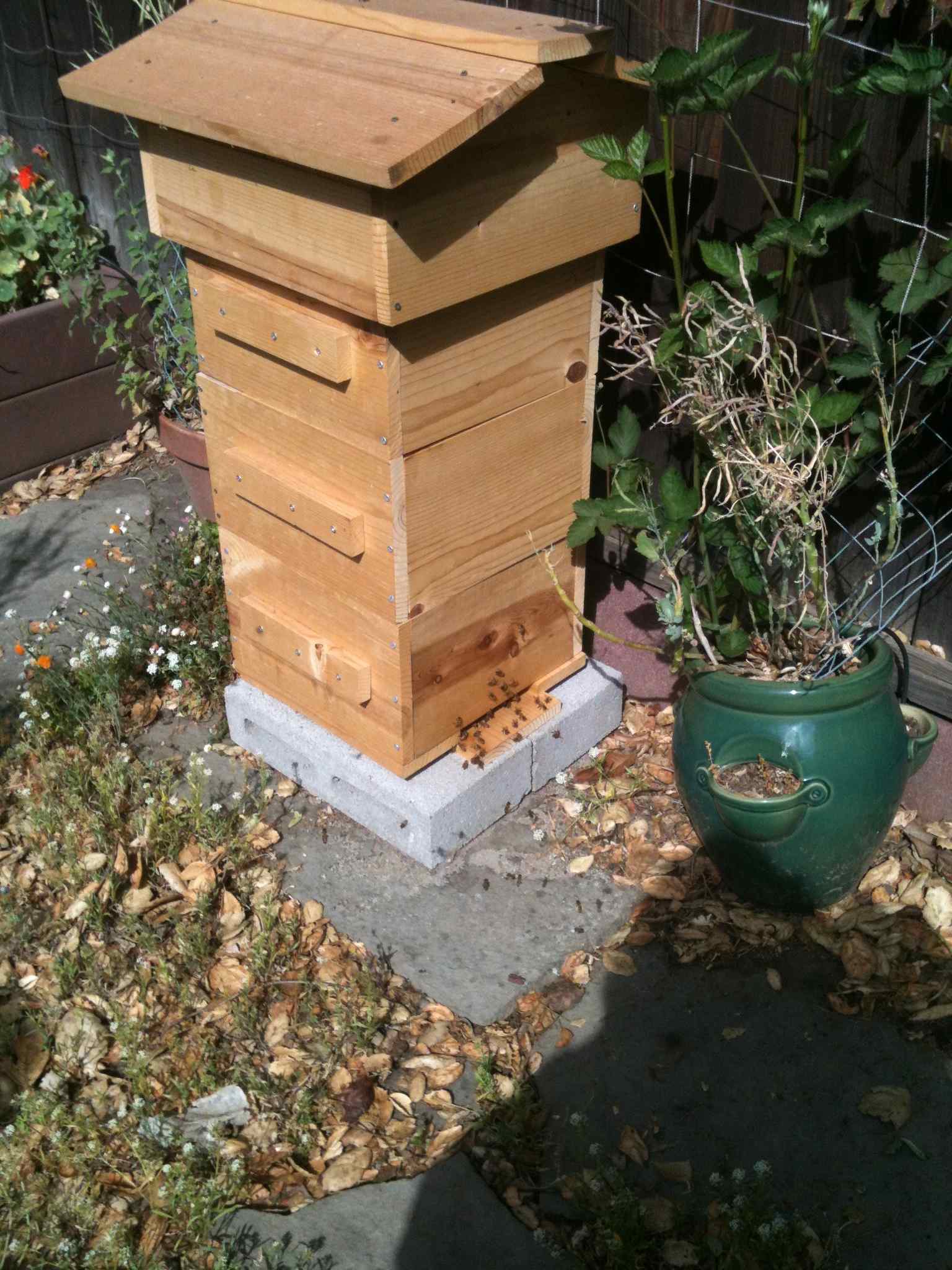
My beehive, built by Rhona Mahony

I think it is pretty.

Rhona installed the beehive, which is of a type called a Warre hive, and the bees on the day my father in law passed away—April 8, 2012, Easter Sunday. FYI, there was no second coming.  Rhona is a beginning beekeeper, so she was willing to take advice. Her first concern is for the bees themselves, because a bee colony is like a single organism, and colonies have been collapsing all over the place. 

The first question we had to answer was “to smoke or not to smoke?” To harvest honey, you have to open the hive, and this can make the bees very angry.  Rhona opened the hive once before, months ago, and the bees chased her out of the yard and she got stung.  But she didn’t want to use smoke to pacify the bees because she thought it poisoned them and would weaken the hive.

I saw her point, but I did not want to get stung. So I read The Beekeeper’s Handbook,  by Diana Sammataro and Alphonse Avitabile, Fourth Edition. It said that the reason smoking the hive works is because bees communicate by smell. Smoke masks the alarm pheromones produced by the guard bees, so they don’t attack. It’s like cutting the power to an alarm system.  So that fact, and the fact that the person we borrowed a bee suit from ALWAYS uses smoke, convinced Rhona. She had a smoker, and agreed to use it.
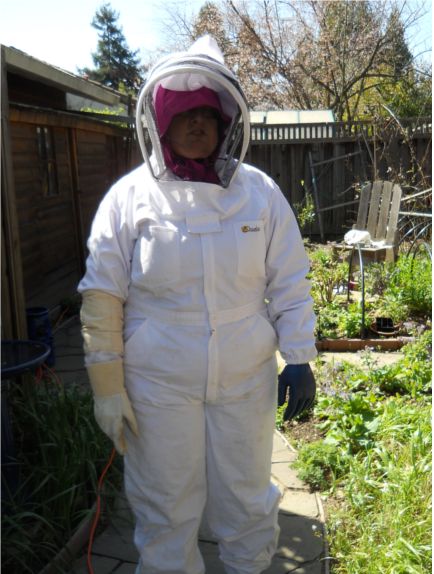
IMG_1270
We had to choose a day.  The time to harvest honey is between noon and three pm, when the bees are out foraging.  The day to harvest is when there are no gardeners, neighbors, dogs, or children around.  I figured it out with the neighbors, and we met at my house on the appointed day.  We put on bee suits—I borrowed mine, as I mentioned, from another amateur beekeeper. Then Rhona lit some egg crate cardboard on fire and put it in the smoker, which looked sort of like the oil can in the Wizard of Oz. She pumped smoke into the hive, and we lifted the roof off the hive. The buzzing coming from the bees in the hive, which was loud, got even louder and changed pitch.  But we were not attacked.

Rhona used her hive tool, which was like a small crowbar, to separate the “quilt,” the top section of a Warre hive which is located under the roof of the hive and packed full of insulation, from the other sections of the hive.

Under the quilt were three other sections, which were where the bees built their honeycomb that contained their eggs, larvae, and food stores, aka honey.

Working together, we picked up one section of the hive, which was full of bees, honeycomb, and honey, and carried it some distance away, and set it the section on a  clean Rubbermaid container.  Using  the hive tool again, Rhona cut around the sides of the one of the ten hanging honeycombs, and detached it from the board it was hanging on. The comb fell into the container, and honey began to ooze from the broken honeycomb cells immediately. But it was fine, because everything we were working with had been washed.  Rhona cut two more honeycombs out, then she picked up that section of hive and carried it back to the beehive.  She and I inspected the other hive sections and saw that the bees were healthy and had a lot of larvae developing.  Then we put the hive  back together, put the lid on the container with the three honeycombs, and after posing for pictures, took our bee suits off. I put the container in the garage, where it was cool and shady.

I posted on Facebook that combs full of honey were not the same as honey in the jar. Bees build combs out of beeswax, and the cells of the combs are quite small.  I posted on my Facebook page that honey in the comb and honey in the jar are very different things, then rested.

About three hours after we had put the combs in the blue Rubbermaid container, I brought my friend Anne in and opened the lid to show her the honeycombs.

“Ooooh,” she said, “there are bees crawling around in there.”

And so there were. There were quite a few bees crawling around, covered in honey, but quite alive. So I rescued them, and this is how I did it.

I got a small, maybe 1 ½ pint sized container that I put an inch of warm water in.

I helped as many bees as possible crawl from the honeycomb onto some wooden clothespins in the container, then put more clothespins in the container so the bees could pull themselves out of the water to breathe and groom the honey off their wings.

I put the little container with water, bees and clothespins in the sun near the beehive. In the morning the container had no more bees in it.

That night, I brought the blue container into the kitchen, and scraped some more bees off the combs and put them outside too. Most of those bees didn’t make it.

Then I had the honey and wax to deal with. I cut the caps off the combs with a sharp knife and tipped the whole container up at a sharp angle– almost vertical –so the honey would drain out of the combs and pool all at one end. That’s how I left it overnight.

In the morning, I cut the combs into little pieces, then used a metal ladle and serving spoon to scoop the honey into the paint straining bags which I put onto one gallon jars, and let drain for a couple of hours. I repeated this until the combs were all in the strainers.
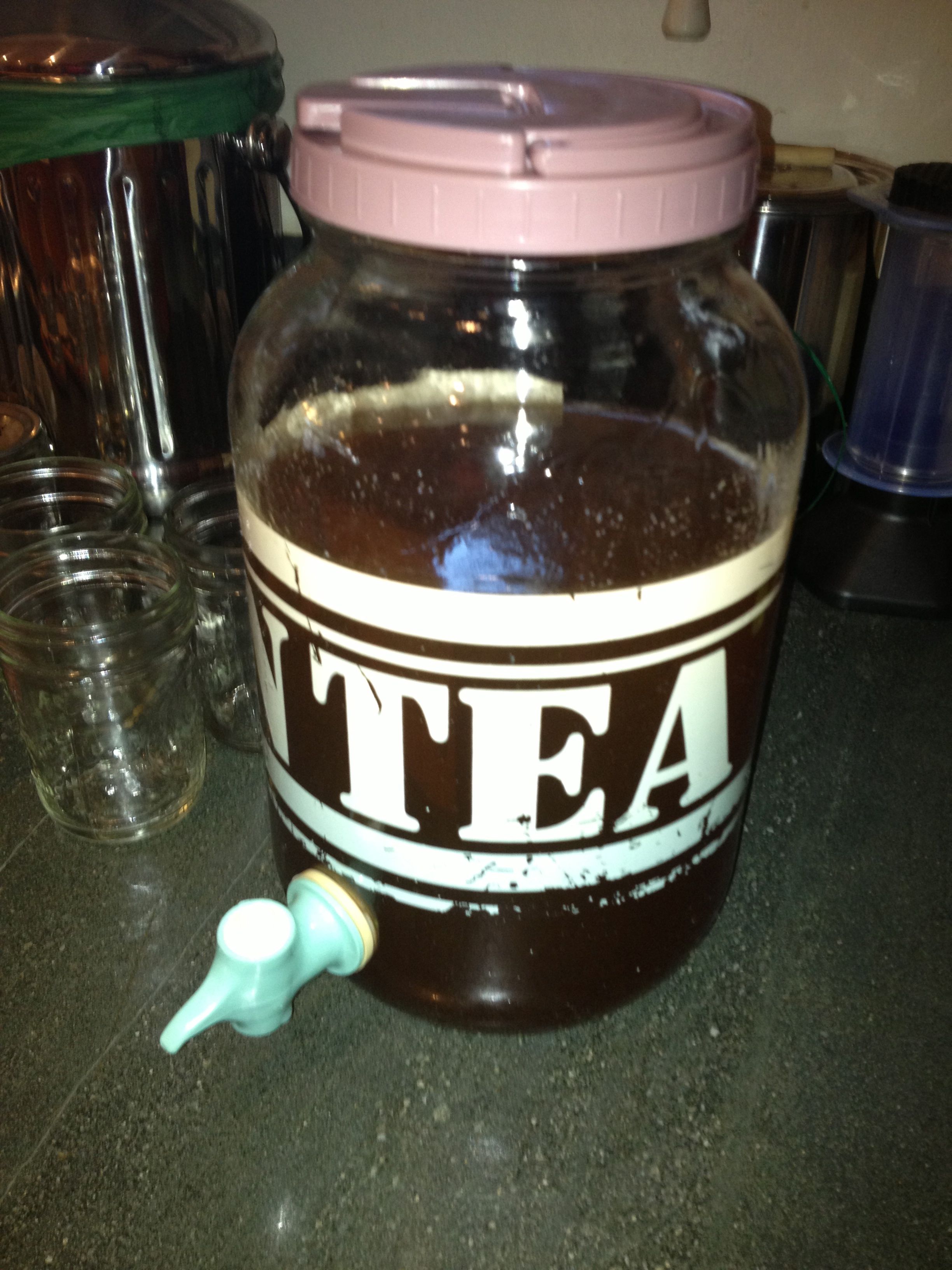
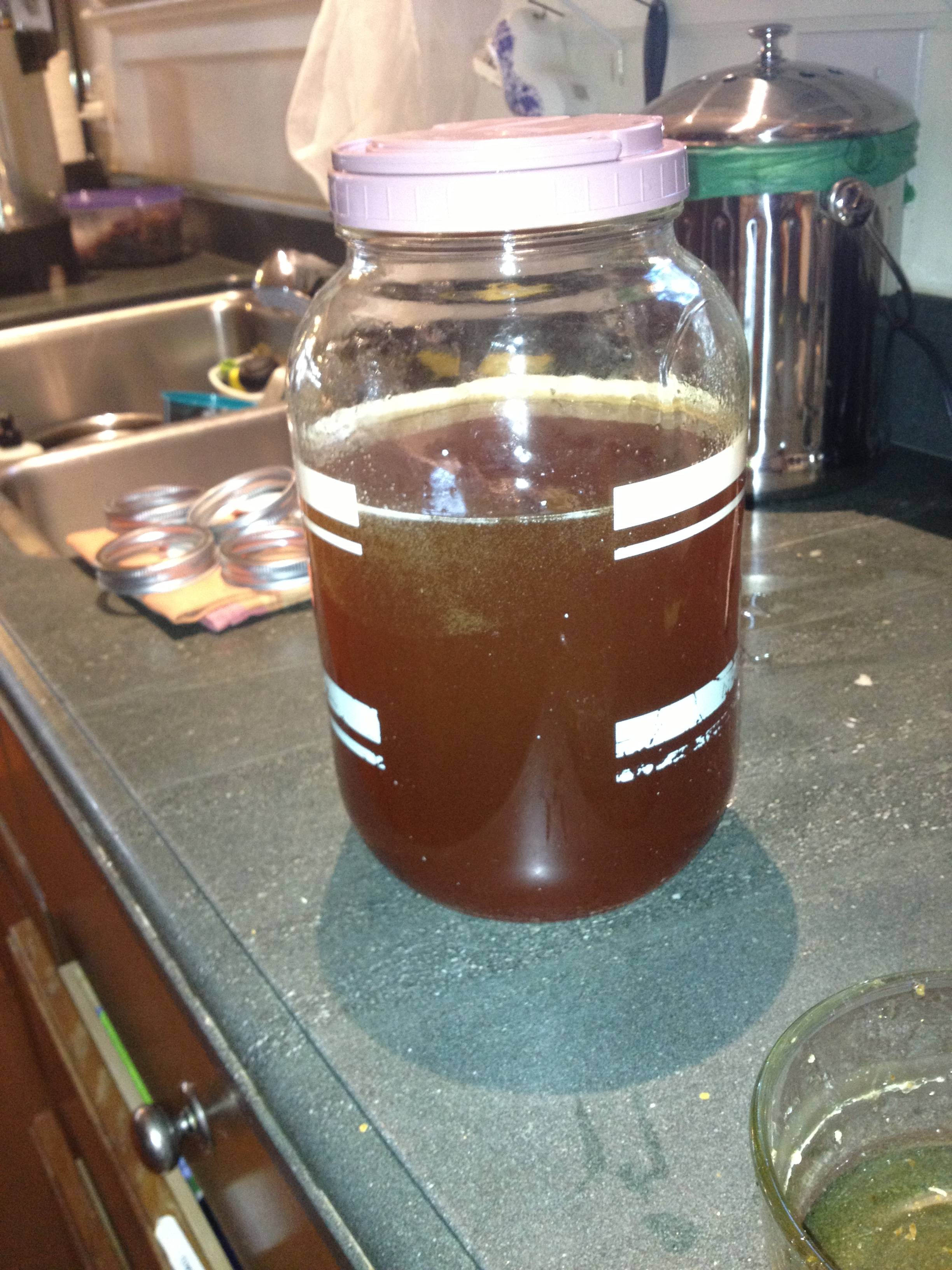
IMG_1271IMG_1275

Finally, I twisted the strainers to force more honey out of the combs, then put the leftover combs in a couple of stainless steel bowls I had, set the bowls in a low oven (160 degrees Fahrenheit) so the wax would float to the top and the honey would sink to the bottom. This worked well. I added the honey to the gallon jar, and then decanted it into smaller jars.
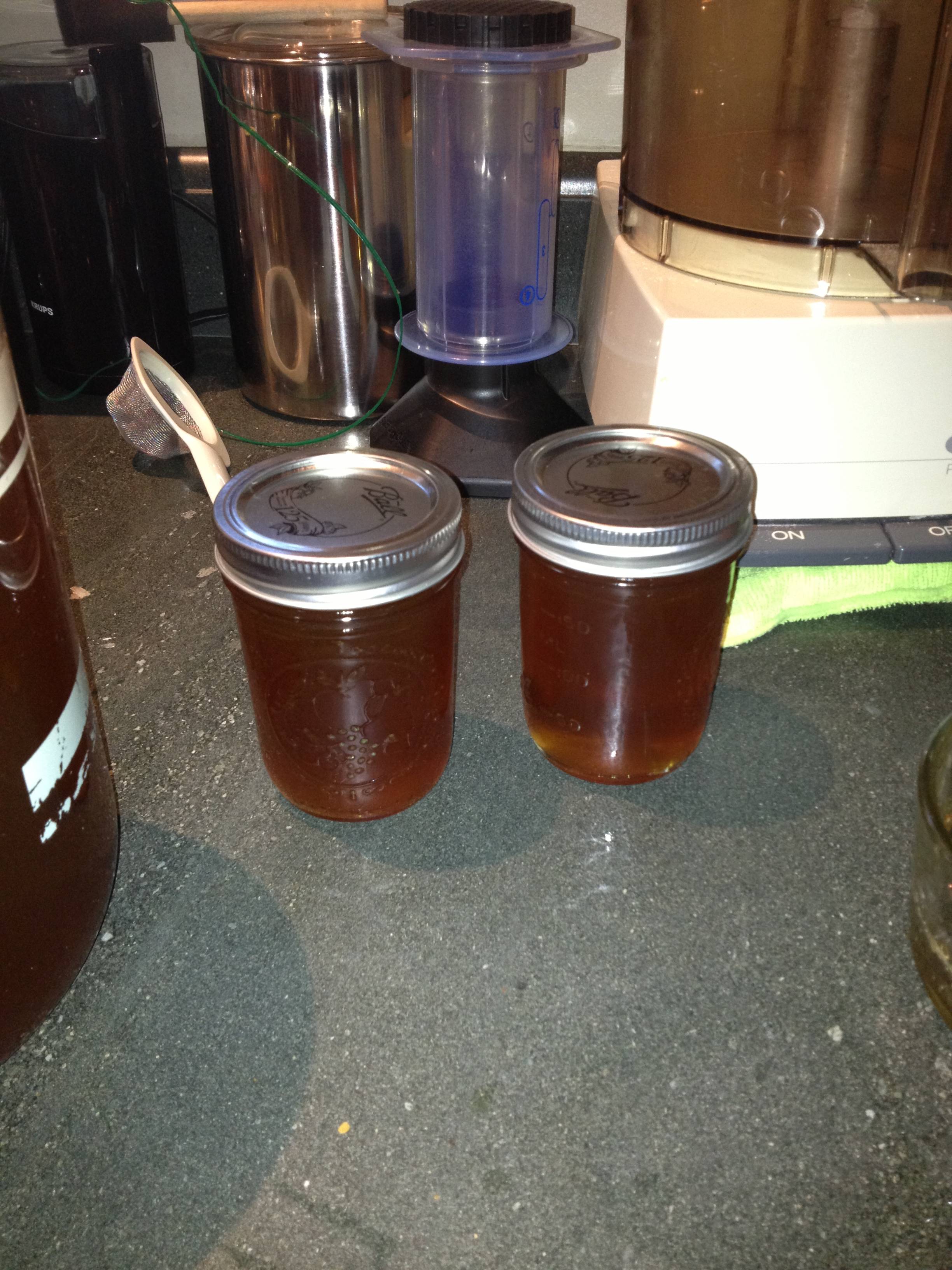
IMG_1276
I traded the unrefined wax with Anita Rosen for a block of refined wax.

That morning at the farmer’s market, I bought the bees some flowers and left them in the backyard for them to feed on as a thank you.
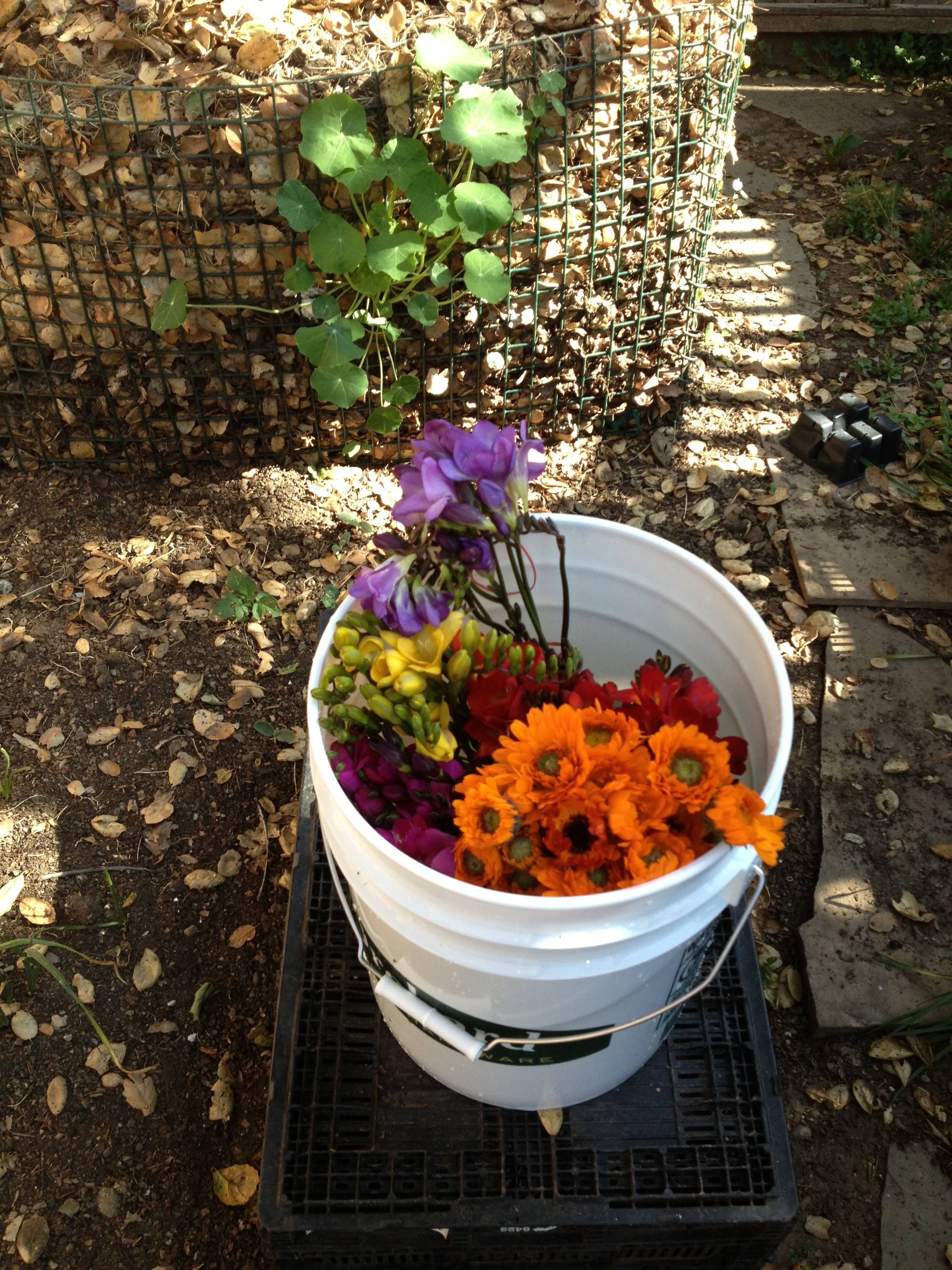
IMG_1298


Posted in Uncategorized | Tagged | Leave a comment

Improved Passover Apple Cake!

 I posted this apple cake recipe YEARS ago, on Blogspot, on my blog called “Melon Memories,”  which still exists, because I am a digital packrat and blogs are hard to kill.

For my Seder this Pesach, I gave the recipe to one of my guests to make.  And they improved it!  So here is the new, improved, recipe, thanks to my neighbor and good friend, Melissa Baten Caswell.

The cake has a batter that goes under and around the apples and a streusel topping that goes over the apples. It gets its lightness from beaten eggs, so don’t rush the mixing process, and use a stand mixer for best results. The original recipe is from “The Complete Passover Cookbook” by Frances R. AvRutick, Jonathan David publishers, copyright 1981.

Cake:
3 eggs
½ TB kosher for Passover vanilla extract
1 tsp almond extract
3/4 cup brown sugar
1/3 cup oil
3/4 cup cake meal

Filling:
Zest and juice of one Meyer lemon-if you don’t have a Meyer lemon, skip the zest
5 Granny Smith apples, peeled, cored and sliced, tossed with lemon juice to keep from browning.

Topping

I sort of worked by feel, rubbing the margarine, brown sugar, and matza meal together by hand. The topping should have the texture of coarse corn meal. If it is too dry, well, add a bit of margarine.

Rub together in small bowl, then set aside:
1/4 cup (1/2 stick) margarine
1/2 cup matza meal
1/2 cup brown sugar

In a medium-size mixing bowl, beat the eggs with the sugar and oil until the mixture is light. Add the cake meal and mix well. I use a stand mixer.
Pour half the mixture into a lightly greased 8 or 9-inch square baking pan. Distribute half of the apples over the batter. Pour the remaining batter over the apples and cover with the remaining apples. Combine the topping ingredients in a small bowl; sprinkle over the apples. Bake in a preheated 350 degree oven for approximately 1 1/2 hours. Serves 8 or 9.

Double the recipe and you will have a 9×13 inch cake. I always do. The cake freezes well, and is lovely reheated and served warm.

Posted in Pesach | Tagged , , , , , , | Leave a comment

Striped Hamantaschen

I love to bake.  I  also used to make jewelry out of polymer clay. One year I combined the techniques of polymer clay with the recipe for my chocolate filled hamentashen, and got chocolate striped hamentaschen.I am not going to tell you too exactly how to make the striped ones I have become famous for. The pictures to the right and below contain enough information for you to figure  out how to make them.

o                                    


 The striped hamentaschen I made from the multicolored ‘cane’ pictured above.

The predecessors of these striped cookies are Alice Medrich’s Chocolate Hamantaschen.

I won the Congregation Etz Chayim hamantaschen bake-off in with them in 2003. One dad called them “heroin hamantaschen,” because they were so addictive, he could not stop eating them. I can’t blame him. They have two of the best flavors in the world in one bite—the cookie is a rich vanilla butter cookie  and the filling is chocolate brownie, a ganache actually. Alice Medrich published the recipe in her book A Year in Chocolate. 

You should know a few things: that this filling recipe makes enough for almost two batches of cookie dough, a teeny tiny little 1/2 tsp cookie scoop is the fastest way to parcel out the filling, and that you should wet the edges of the cookies and pinch the sides of the hamantaschen together very carefully  to make sure they do not fall apart in the oven.

Chocolate Hamantaschen

Filling

1 stick butter
4 ounces unsweetened chocolate, coarsely chopped
3/4 cup sugar
1 teaspoon vanilla extract
1/4 teaspoon salt
2 cold eggs
2 tablespoons all-purpose flour

Melt the butter and chocolate together in a double boiler, stirring frequently. Remove the top of the double boiler and add the sugar, vanilla extract and salt and continue stirring. Add the eggs one at a time, stirring to incorporate each completely before adding the next. Finally, stir in the flour and beat with a wooden spoon by hand for about a minute. The filling will turn glossy and begin to come away from the bowl. Transfer to a small bowl, cover, and refrigerate until needed. NOTE: If you make the filling ahead of time and freeze it, it separates a tiny bit, but frozen or very cold ganache scoops much more easily with the teeny tiny cookie scoop, especially if you dip the scooper in warm water from time to time.

Cookie Dough

2 cups flour
1/2 teaspoon baking powder
1/4 teaspoon salt
1 stick butter, softened but not squishy
1 cup sugar
1 egg
1 1/2 teaspoons vanilla extract

Mix the first three ingredients with a whisk and set aside. In a large bowl using an electric mixer, cream together the butter and sugar for about 3 – 4 minutes, until light and fluffy. Beat in the egg and the vanilla, and then, on low speed, beat in the flour until just incorporated. Form the dough into two bricks, wrap with plastic wrap and refrigerate over night.  NOTE: DOUGH FREEZES BEAUTIFULLY.

With the oven preheated to 350, remove the dough from the refrigerator and allow to warm until it becomes supple enough to roll out. Roll each brick individually to a thickness of about 1/8″. It is easiest to do this between two sheets of wax paper. You may want to turn the dough over a couple of times, keeping it between the two sheets, to ensure that no deep creases form.

Cut cookies out using a 3″ round cutter and transfer cookie rounds to a cookie sheet lined with parchment paper. Put a leveled teaspoon of filling in the center of each cookie round, then bring 3 sides of each round up to partially cover the filling. Pinch the sides together. Cookies should be spaced about 1/2″ apart on the sheet.

Bake for a total of 16-18 minutes, rotating the pans half-way through baking.  Let cool briefly on cookie sheet, and allow to cool completely on racks.I give mine away as soon as I make them, because they are too good.

Posted in chocolate hamentaschen, creative cookies, creative hamentaschen, Purim, seders Palo Alto Etz Chayim | Tagged , , , , , , , | Leave a comment

A New Year’s Day Plan

At last, a plan for New Year’s Day

My New Year’s Day Party 2014 will be like my New Year’s Day Party 2013. This means that I have already planned NEXT year’s New Year’s Day Open House, and can finally take the time to invite all the people I want, instead of forgetting half of them.

I’m not much of a planner, more of an improviser, and a panicker until the first guests arrive. I have been known to knock on neighbors doors during the party to invite them over.  But now I have a plan, so I can relax.  It only took me 28 years to settle on a party format that works.

28 years?

Oh, yeah.

I’ve been giving parties on New Year’s Day since 1986, when I moved into my first house. As the new wife in a competitive family, I wanted to claim a holiday for my own, and there wasn’t much to choose from. My husband’s mother claimed  all major holidays, birthdays and anniversaries, and my husband’s older brother’s wife claimed the Jewish holidays. The younger brother claimed New Year’s Eve. So I got New Year’s Day.

It works because no matter how many New Year’s I have had in the Pacific Time Zone, I think that New Year begins at midnight in the timezone in which I was born.  So when the ball drops in Times Square, I want to drink champagne and go to bed at nine o’clock at night.

The last New Year’s Eve party I  stayed up late for was New Year’s Eve 1988.  I was very pregnant, the baby was due in 5 days, and I was in pre-labor. I was dancing like crazy and jumping around a lot, actually alarming some of the other guests at the party who thought I might have the baby right there by the punchbowl.

I didn’t.  I came home, got ready for bed, and when I was taking my eye makeup off, my water broke., and twenty-one hours of excruciating labor later  my eldest was born on Jan.1.  Eleven oh- five pm.

So I can throw ANY kind of party on New Year’s Day, it’s bound to be easier than what I was doing on  New Year’s Day of1988.

It’s been a marathon of gaiety.  I  used to start with a childrens party, then I would have an open house in the afternoon for the adults. I’ve had the adult open house and  a  birthday dinner running concurrently, where I set up the dining room for my son and his friends, and cooked enough Fred’s Steak and mashed potatoes for twelve teenagers, who ate almost as much as  the 50 adults I had in the rest of the house.   I  have entertained 100 or so people in my home in the early afternoon, kicked them out and half an hour later, convened with  family at The Cheesecake Factory.

But next year, I’m not going to do any of that.  I’m going to do just what I did this year, 2013, down to the serving help and jazz combo.

What did I do in 2013? If you weren’t there, just be nice to me in this year, and you can come see me repeat everything, exactly the same way on New Year’s Day 2014.

I’ll put you on the guest list.

Which I will start working on tomorrow.

Posted in Uncategorized | Tagged | Leave a comment

Rare Torah scroll written by woman on loan to Palo Alto congregation

Torah scroll is on loan to Congregation Etz Chayim through March 4, 2013, as described in the article below, published in the San Jose Mercury News on January 29, 2013.

Rare Torah scroll written by woman – San Jose Mercury News012913

Posted in Uncategorized | Tagged | Leave a comment

Rare Torah scroll on loan to congregation

Torah scroll is on loan to Congregation Etz Chayim through March 4, 2013, as described in the article below, published in the Palo Alto Daily News on January 26, 2013.

Front_Page_DailyNews

Posted in Uncategorized | Tagged | Leave a comment

For 2013, A Marriage Agenda – Forward.com

For 2013, A Marriage Agenda – Forward.com.


My mother shared Jane Eisner’s concerns–she pushed reproduction and liberal values, but marriage, she said, was “just a piece of paper.”


Posted in Uncategorized | Tagged | Leave a comment

My post on The Giving Season on the Jewish Women’s Archive

Holiday Giving

Published December 25, 2012

Today is Christmas, perhaps the ultimate holiday for giving, and I am reflecting on the act, ritualization, and commercialization of “giving.”

In the past few weeks the media has been abuzz with commentary on the virtue or the silliness of Giving Tuesday. Social media and a consortium of charities pumped up the idea of naming the Tuesday after Black Friday and Cyber Monday “Giving Tuesday,” declaring it the beginning of “The Giving Season.”

Anyone who restricts giving to a short season is not Jewish: the Jewish giving season has no real beginning, because it never ends.

We remember our dead by giving charity in their memory. We celebrate new life the same way. We celebrate holidays by—you guessed it—giving charity. The Hebrew word for sharing one’s assets is tzedakah, which means justice, not charity. Our tradition encourages us to pursue it every day, or “Tzedek, Tzedek Tirdof.”

“There are no official holidays for giving,” says Rabbi Ari Cartun, the leader of Congregation Etz Chayim in Palo Alto, California. “You are supposed to share what you have every day, particularly before festivals and holidays.”

Rosh Hashanah is when our tradition states that God writes down everyone’s fate for the coming year. Writes, but does not seal. Tradition says that during the ten days between Rosh Hashana and Yom Kippur, we can improve our “inscriptions” for the coming year by giving tzedakah.

We have special names for the tzedakah that we give during Pesach and Purim. Pesach charity is calledMa’ot Chittim, or “wheat money.” Purim Charity is called Matanot L’Evyonim, or “presents to the poor,” to commemorate the gifts Esther gave during the time she was fasting and preparing to ask King Ahasuerus to spare the Jews of Persia from slaughter.

This year was the first official “#givingtuesday,” and there was an upsurge of giving on that day. But no matter what the name of the day is, giving is not a choice. As Jews we need no buzzwords or ways of “packaging” our giving, because, as my mother used to say, “What you give away is yours forever.”

There is one thing about Tuesdays, though. Tuesday, or Yom Shlishi, the Third Day, is the day of Creation when, according to the bible, God said the words “and it was good” twice. It is considered lucky.

So maybe THAT is why the people behind “Giving Tuesday” chose Tuesday.

What do you think?
– Why does tzedakah play such an important part in Jewish tradition?
– Is it important to give spontaneously throughout the year?
– Why do we tie giving to justice?


Posted in Uncategorized | Tagged | Leave a comment

My philanthropy problem

I support my old summer camp, Naaleh, in New York, because I had many happy years there. I  made some good friends when I was young and lived back East. I lost touch with most of these friends when I got married and moved out to California, which was sad, but OK.

What is not OK is when one of those friends, after a 29-year hiatus, reconnects with a  sticky note that I thought was personal on a mass mailing letter. I was excited to see it. But all it said was we had gone to Naaleh together and she remembered me and could I please donate to Naaleh’s scholarship fund.  I threw the letter and the sticky note away.   I was hurt that, in romantic parlance, ‘she only loved me for my money.’

When we were high school kids, she and I hung around the National Office in downtown Manhattan and helped with mass mailings.  We never read what was in the envelopes, just weighed them and put the right postage on them.

I wonder if my friend was at the National Office, or if there even IS one.

Today, mass mailings can go out of your HOUSE. Maybe my old friend used her own printer to do a mailing and stuck a sticky note on my letter. Or, and I am sorry to say this happens, but it does, someone could have written a note on a post-it, signed her name, and stuck it on the letter. Either way, I felt ‘dissed.’

I will keep giving, because that is what I do, on my own schedule, which I track with a spreadsheet, but a sticky note that just repeated what was on the letter  wasn’t going to sway me.

I’m not going to name names here.  I’m tempted, but I will refrain. Maybe another blog post. But I encourage everybody out there to send their children to summer camp, especially a camp like Naaleh, where they encourage their campers to do things besides work on their tans. It was very good for me to get out of the house and out from under my parents feet, even if it was a hard adjustment.

My first days away from home were very difficult. I ran away from my bunk.  I hid in trees. I wondered why my parents ripped me out of my eigth floor bedroom with all my nice toys and books to go to a place with disgusting showers and bugs. But I eventually warmed up to Naaleh, and went back seven years in a row. This is an excerpt from the memoir I’m writing, called “The Girl on the Wall,” that gives a little flavor of being a child at Naaleh.

When I was nine, they sent me off to Habonim Camp Naaleh, a Socialist Zionist summer camp where we spent the days playing volleyball and making lanyards, and talking about Israel, class and wealth.

Habonim is a worldwide youth movement that was founded in the 1920s. In 1967, it had a camp in Red Hook, in upstate New York. The camps were modeled on the Israeli kibbutz. They were less religiously observant than many such camps, more observant than others. At Naaleh, we used the PA system and did arts and crafts on Shabbat, although we kept the kitchen kosher as a symbol of our commitment to being inclusive of all Jews — even the ones who believed in strict adherence to the laws separating men and women at prayer, and the ones that insisted married women cover their hair and that all women dress modestly. Tell that to the counselors running around in cutoff jeans and bandannas for halter-tops.

We learned Hebrew by using individual words for everyday summer things, like flagpole raising (mifkad), doing a couple of hours of menial labor after breakfast (avodah), arts and crafts (melachah), scout craft (tzofiut), along with reading mail (doar) after lunch (aruchat tzohoraim) in the dining room (hadar ochel) during rest period (menuchah). The tzevet (staff) scheduled the sichot (discussions).

I had no talent for jumping jacks or skipping rope, so my activities consisted of reading books I brought along from home. One day at camp, I was up a maple tree reading The Hunchback of Notre Dame. It was peaceful and wonderful up in that tree, where the leaves shaded me from the outside world and cast a cool green light on my Modern Library edition. I was almost crying, though, because the story was so sad. Esmeralda — dragged through the streets in a tumbrel, stoned by the rabble after being tortured — was about to be hanged as a witch. Quasimodo was up at his usual perch in the bell tower, howling with grief. Poor Esmeralda! Poor Quasimodo!

Meanwhile, it was time for sicha, Discussion Group, an annoying activity that took place every day at 2:15 p.m., despite my dogged lack of participation. Hidden in my leafy perch, I was planning to read right through until the afternoon snack. Stupid groups, I thought.

Some of the older kids, maybe thirteen years old, plopped down in a semicircle at the base of my tree. The counselor, around twenty, leaned against the trunk.

“Who here knows what social class is?” he asked them. My ears perked up.

“Uh, a place where you learn about social studies?” one of the campers suggested.

I leaned out over my branch to see and hear more clearly.

“Not quite,” said the counselor. “Think about the song we sing, Arise, ye prisoners of starvation.” Slowly and stealthily, I began to climb down to hear better. “Remember how it ends with ‘The international working class will be the human race?’ Class is a big group of people who are alike. It has more to do with who has money and who doesn’t than with school.”

“Hey, I know!” I said, finally jumping to the ground. “If you have a place to live and enough to eat, you’re middle class or upper class. I was just reading about it,” I said, pointing to my book. “The priests and noblemen are upper class, and the people in the middle who have stores and stuff are middle class.”

“Well, what class are you?” the counselor asked me.

“Upper middle class,” I said with pride. “My father took us to Israel when I was six, and I got an English Racer bicycle for being brave when I got my shots.”

The counselor seemed to think this over. Then he nodded and invited me to join the discussion.

Finally, something I was happy to discuss.

Posted in Uncategorized | Tagged | Leave a comment

I explain the stock market to a sportswriter

I hardly knew anyone in Palo Alto in 1984. Desperate for a familiar face, I sought out an old friend who had written sports for the Barnard Bulletin when I was the features editor. She now lived in an apartment building near the Bayshore highway, and worked in a startup sports magazine headquartered in the upstairs offices of the shopping center near my house

“So you were on Wall Street,” she said over lunch. “Explain the stock market to me.”

I thought for a moment. I remembered my economics classes, and the analyst panels I transcribed for The Wall Street Transcript, and what I was picking up by osmosis from the Tramiel clan.

“The stock market is like horse racing,” I said. “Every company that goes public is a horse, and people bet on them.”

“Okay, horse racing I can understand,” she said. She was writing now for a small women’s sports magazine.

“The price of the stock is like the odds. If a company is making money and people think it will do well, more people buy the stock and the share price goes up. The brokerage firms are like the OTB offices. Stock analysts are handicappers, and lots of people write predictions that are like those racing forms you get at the track, some people sell those predictions to brokerage house customers, some write for mutual fund managers.”

 I got a letter from her a couple of weeks later “I quit my job and moved to another city to find a better life.”

Posted in Uncategorized | Tagged | Leave a comment